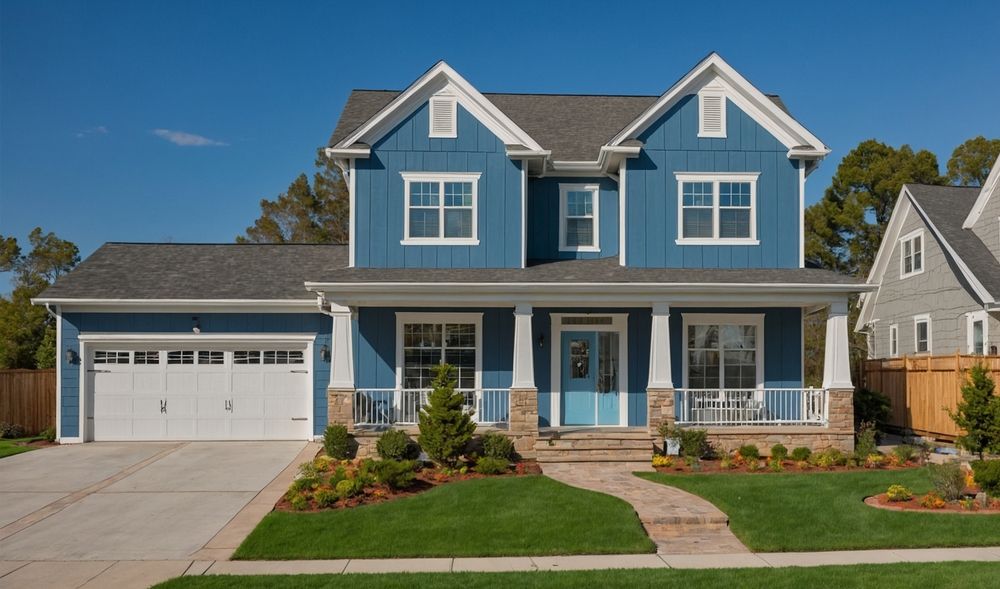

Types of Architectural Drawings – Guide 2025
Architects use numerous types of drawings to make ideas real and constructible. The purpose of each drawing is to demonstrate the connection between a building and its location, as well as how a wall can be connected to a roof.
Knowing the architectural drawings enables the homeowner, builder, and students to visualize a project before a shovel touches the ground.
Here you will find out what each type represents, why it is important, and how to determine what drawings you will use in a project.
To get advice on how to structure home renovation plans, a
custom home builder's resource will be more helpful.
Site Plan Drawings
A site plan is a top-level view of the building site and the surrounding area. A good site plan would indicate property boundaries, buildings and proposed buildings, site accessibility, utilities, and landscape.
Even the site plans may indicate adjacent roads or infrastructure, and version 3D can help a client view them. Such drawings are essential for identifying the building on the lot, setbacks, easements, and the zoning rules to be observed.
Major details usually consist of:
- Fences and where the house or building is.
- Driveways, patios, decks, pools, and other amenities.
- Storm drains, landscaping features, and utilities are underground.
- North arrow, scale bar, and legend to elaborate symbols and measurements.
The initial drawings are typically site plans, as municipalities require them for permits. They are also used to assist project managers in organizing large sites by estimating earthwork, planning access, and managing deliveries.
The site plan is essential during a
home remodeling project or a
new construction to avoid overrunning the installation of easements or utility lines.
Floor Plan Drawings
A floor plan provides an internal view of a building from above. It is a scaled diagram that illustrates rooms, walls, doors, and windows, enabling stakeholders to see how spaces relate to one another.
Newer software can create 3-D floor plans, including furnishings and finishes. Floor plans also help clients understand the flow of the rooms, the placement of furniture, and the layout's efficiency.
The common elements on floor plans are:
- Name of the rooms, size, and area of surfaces.
- Walls, doors, windows, and holes.
- Stair location, kitchen location, bathroom location, and built-ins.
Occasionally, electrical, plumbing, or HVAC plans are also more detailed.
When planning an open-concept redesign, a detailed floor plan can help you determine whether removing walls will enhance sight lines and circulation.
When comparing designs, seek plans that consider privacy (for the
luxury bathroom or bedroom) and common areas.
Elevation Drawings
An elevation drawing shows one side of a building, making it look as if you are standing in front of it. They are vertical orthographic projections of facades devoid of perspective.
Elevation drawings are usually drawn in the front, back, and side exterior perspectives: cabinetry, doors, and built-ins are shown in an interior elevation view.
Elevation drawings include:
- The size and dimensions of walls, windows, and doors.
- Sloping roofs, chimneys, dormers, and finishes of materials.
- Markers of the floors and vertical levels.
- Exterior material such as siding, stone, or stucco.
Raisings are also frequently used by homeowners to gauge curb appeal. For example, you may introduce a
dormer to expand the attic space or alter the roofline.
A rise is used to determine whether this change complements the rest of the facade.
Cross-Section Drawings
A cross-section (or section) is a slice that opens up the interior of a building. Cedreo explains cross-sections as vertical cuts through which one can observe visible and invisible elements.
Cross-sections are used to explain how the walls are constructed, how the windows are fitted, and how the floors are made.
A cross-section drawing's common data:
- Wall, floor, ceiling, and foundation construction details.
- Elements of structure, like beams, columns, and reinforcement.
- Stair profiles, roof slopes, and ceiling heights. Connection between the floors and rooms.
Complex builds and renovations are dependent on cross-sections. They demonstrate how new work relates to the old structure and whether load-bearing walls are to be supported.
They also assist in
construction planning and in identifying optimal utility routes using joists and walls. A section of a passive house can emphasize insulation panels, air, and vapor barriers.
Roof Plan Drawings
The roof plans provide a bird's-eye view of the roof's shape, slopes, and characteristics. Ridges, valleys, dormers, and materials are depicted in roof drawings. They assist builders in building roofs with complex designs and proper drainage.
The items on a roof plan could be:
- Description of the roof in the form of slopes and pitches.
- Position of chimneys, skylights, vents, and gutters.
- Underlayment and roofing material specifications.
- Dales, protrusions, troughs, and recessions.
In
post-and-beam construction, a roof plan shows how the timber frame supports the roof and where to install energy-efficient windows, such as skylights or solar tubes.
When comparing two roof types, consider maintenance: flat roofs require regular waterproofing, while steep-slope roofs help snow melt but may require special materials.
Landscape Drawings
The drawings provided by landscape architects depict the exterior landscape.
They are identified by Cedreo as site plans but are centered on the landscape, vegetation, and outdoor living. They can feature both 2-D layouts for measurements and 3-D images for realistic rendering.
Common elements of a landscape drawing:
- Species, size, and spacing of planting schemes.
- Hardscape materials such as patios, walkways, and retaining walls.
- Safety and ambience lighting plans.
- Drainage schemes and irrigation schemes.
Homeowners use landscape drawings to lay out rain gardens and the native plants to be used in their houses.
It increases energy efficiency by covering windows and minimizing heat loss, while also enhancing aesthetics and property values.
Detail Drawings
Detail drawings are used to scale down less important portions of a building, revealing how its parts come together.
Such drawings tend to mix cross-sections and close-ups. Step-by-step drawings may be included for connecting the beams or for constructing custom features.
Detail drawings may cover:
- Intersections of materials (e.g., where a wall/roof intersects)
- Timber frame Joinery and fasteners, or steel beam fasteners.
- Tailor-made mouldings, ornaments, and special architectural details.
- Complex openings such as window openings or roof eaves.
As-Built Drawings
As-built drawings are those that represent the reality of what is constructed by the conclusion of the construction. These are final drawings that reflect all parts as finished, including materials, locations, and sizes.
Contractors alter the original drawings to indicate the changes in the field. As-built drawings include:
- Final wall sizes and positions, door sizes, window sizes, and utility placements.
- Notes of materials and any replacements.
- Site-related changes or changes requested by clients.
- Information required when the building needs maintenance, renovation, or repair.
These reports are important to the building owners and facility managers. They can serve as a source of future maintenance, repair, and upgrades.
If a homeowner wants to install
radiant heating after the home is finished, the plans indicate the locations of existing pipes and wires to avoid costly repairs.
MEP and Electrical Drawings
MEP drawings include mechanical, electrical, and plumbing drawings. It describes the HVAC systems, electrical drawings indicate the distribution of power and lighting, and plumbing drawings demonstrate the water supply and waste disposal.
The data accessible in MEP drawings:
- HVAC equipment locations and system specifications layouts.
- Electrical wiring diagrams, circuit diagrams, and positions of outlets and switches.
- Plumbing pipe layouts, positions of fixtures, plumbing pipe sizes, and materials.
- Fire suppression mechanisms, including sprinklers and fire detectors.
Final and Final Presentation Drawings
Final images represent a completed appearance and touch of a space. Cedreo states that he completes drawings that explain floor coverings, moldings, textures, and colors.
Presentation drawings, such as 3D renderings, provide clients with a visual representation of the completed project.
Essential issues in completing drawings:
- Patterns and flooring materials of every room.
- Wall decor, such as paint, tile, or wallpaper.
- Styles of cabinetry, countertops, and fixtures.
- Lighting design and interior decor that add atmosphere.
Durability, maintenance, and cost are factors to consider when choosing finishes.
Families with children or pets should consider flooring and paint that are easy to clean and almost unbreakable.
FAQs
What are the main types of architectural drawings?
The core types include site plans, floor plans, elevations, cross-sections, roof plans, landscape drawings, detail drawings, as-built drawings, and MEP/electrical plans. Each one explains a different part of the design and construction process.
Why are site plans necessary?
They show how a building sits on its property, including access points, utilities, setbacks, grading, and landscaping. Site plans are required for permits and help coordinate work on-site.
How do floor plans and elevations differ?
A floor plan is a top-down cut showing room layouts and the flow of movement through the space. An elevation is a straight-on view of a building's height, finishes, windows, and architectural style. You need both to understand the whole design.
Conclusion
The plan for translating ideas into livable spaces is presented in architectural drawings. Every drawing has a specific use: the site plan, working up your property, or the final drawings, including choosing paint colors.
Knowing what architectural drawings look like enables homeowners and builders to communicate, plan, and carry out their projects with confidence. Whether designing a basic remodel or an elaborate custom home, time, money, and stress are saved by investing in detailed drawings.
Whenever you are in confusion,
seek the advice of a licensed architect, since precise drawings are the key to any successful construction.